SEO Audits
When Domain Rating Drops but Rankings Don't: What Should You Do?
A lower Domain Rating does not automatically mean worse Google rankings. Learn how to diagnose DR declines, validate search performance, and prioritize meaningful SEO actions.
By Muhammed Lisan A ·
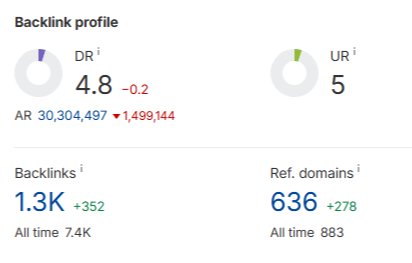
You open Ahrefs and Domain Rating has slid, say from the high 40s into the 30s. The worry arrives first: lost links, lost authority, rankings about to follow. Then you open Google Search Console. The queries that matter look much like last month's, the key landing pages hold their positions, and clicks are roughly level.
Both screens are telling the truth. They are measuring different things.
The short answer: a DR decline deserves investigation, but it does not automatically mean Google rankings will fall, and it does not justify an emergency link-building campaign. Domain Rating is a third-party score, rankings are Google's output, and business outcomes are what the site exists to produce. This article shows how to find out which of those, if any, has actually changed.
What Domain Rating actually measures
Ahrefs describes Domain Rating as the strength of a website's backlink profile compared with other sites in Ahrefs' database, on a 100-point scale. Two details of the calculation matter here:
- Linking domains with a higher DR pass more value.
- A linking domain splits its rating equally among the domains it links to. In Ahrefs' own example, a DR 10 site linking to three domains can influence your DR more than a DR 80 site linking to a million.
Ahrefs also stresses that DR is relative, so there is no universally "good" number. Its help documentation describes the scale as logarithmic. In practice, equal-looking point changes do not represent equal amounts of underlying link strength. A nine-point drop is not "nine points less ranking power", and it can't be converted into traffic or revenue.
It helps to keep four things separate:
- Domain Rating: a third-party score for the reported backlink profile.
- Google rankings: where pages appear for specific queries, as produced by Google's systems.
- Organic traffic: the visits that result from those appearances.
- Business outcomes: the leads, sales or sign-ups those visits produce.
DR does not measure trust, relevance, content quality, conversions or Google's opinion of your site. Ahrefs says there is no evidence that search engines use DR or similar scores as a ranking factor.
That doesn't make links irrelevant. Google documents link analysis systems and PageRank as part of its core ranking systems. The point is narrower: DR is Ahrefs' model of link strength, not Google's. Google's guidance on third-party SEO tools says such tools don't have access to its internal ranking data, and it points site owners to Search Console for first-party data.
Why Domain Rating can fall while Google rankings remain stable
Some of the causes below are documented by Ahrefs, and some are hypotheses. They are possible explanations, not conclusions a DR chart can prove.
- The wider backlink landscape changed (documented by Ahrefs). Ahrefs explains that when a DR 100 site gains links it can't become DR 101, so other sites are pushed down the scale. You can see a drop without losing a single link.
- Links were lost or changed status (documented by Ahrefs). Losing high-quality dofollow links can lower DR. So can a dofollow link becoming nofollow, because Ahrefs says DR ignores nofollow links.
- Your referring domains weakened (documented by Ahrefs). If the sites linking to you lose DR themselves, they pass less, and yours falls with them.
- Third-party data differs from what Google knows (hypothesis). Ahrefs reports from its own crawl and index. Google's view of your links is not visible to you. A change in what Ahrefs sees does not necessarily mirror a change in what Google uses.
- Page-level strength keeps carrying the pages (supported by Google). Google says its ranking systems work at the page level, with site-wide signals also contributing. It adds that good site-wide signals don't guarantee every page ranks well, and poor ones don't doom every page. Relevance to the query, content, and internal links can keep specific pages performing even when a domain-level score moves.
Two caveats apply. A real loss of valuable backlinks is different from a change in how a metric is reported, and you can only tell them apart by looking at the links themselves. And a stable chart today doesn't prove a lost link had no effect. It may matter less than the DR movement suggests, or its effect may be gradual. The data to settle that comes from monitoring, not from the DR chart.
A lower DR does not automatically mean lower organic performance
Metrics only mislead when you expect them all to move together. Compare independent measurements instead:
| Metric | What it helps you understand | What it cannot prove on its own |
|---|---|---|
| Ahrefs DR | Relative strength of the reported backlink profile | Actual Google ranking changes |
| Referring domains | Breadth of the reported linking-domain profile | The value of every link |
| Google Search Console clicks | Clicks from Google Search | Total business value or every visit |
| Google Search Console impressions | Visibility in recorded Google Search results | That every impression had equal value |
| Query and page positions | Ranking trends for selected searches and pages | The full search performance of the website |
| GA4 organic sessions | Visits attributed to organic search under the configured measurement setup | Whether those visits generated valuable leads |
| Qualified leads or conversions | Business outcomes that can be measured reliably | The contribution of every SEO activity in isolation |
Each of these needs context. Average position blends many queries and can shift when new, lower-ranking queries start earning impressions. CTR changes with search result features, not only rankings. Sessions depend on tracking and consent setup. Conversions are only meaningful if tracking has been verified.
How to investigate a Domain Rating drop step by step
Step 1: Confirm the size and timing
Check the DR history in Ahrefs. Note when the decline began and whether it was one step or a steady slide. A single overnight drop suggests a discrete event, such as a batch of lost links or a shift in the wider landscape. A slow slide suggests gradual link attrition.
Step 2: Review lost referring domains and backlinks
Use the Referring Domains report to see which dofollow domains disappeared around the decline. For each important one, ask:
- Is the source page still live?
- Was the link removed, or did it change to nofollow?
- Did the linking site's own DR fall?
Step 3: Judge link quality, not quantity
Ten lost links from low-quality directories and one lost editorial link from a relevant industry publication are not equivalent. Weigh relevance, the context of the link, the quality of the source page, and whether the link plausibly sent value to the pages that earn your traffic. Ahrefs itself warns against judging linking sites by site-wide authority alone.
Step 4: Compare organic performance in Search Console
Use the Performance report with equal-length date ranges, ideally including a year-over-year comparison if seasonality matters. Review clicks, impressions, CTR and average position, then drill into your most important queries and landing pages individually. Site-level averages can hide a problem on exactly the pages that matter.
Step 5: Check traffic and business outcomes
In GA4 or your analytics tool, look at organic sessions, qualified enquiries and conversions for the same period. First confirm tracking works: tags firing, consent configuration unchanged, no channel grouping changes. A tracking fault can look like an SEO problem.
Step 6: Rule out independent technical or content problems
If performance is declining, the cause may have nothing to do with links. Check indexing, canonical tags, robots directives, recent site changes, content relevance versus search intent, and internal linking. If performance isn't declining, this step still catches problems early.
Step 7: Decide what action is justified
Sort the evidence into one of three outcomes: a harmless metric movement, a genuine backlink problem, or a broader organic decline. Each calls for a different response, covered below.
Example: DR drops, rankings stay stable
This scenario is hypothetical. The numbers are illustrative only. It is not actual client data, not a verified case study, and not evidence of any guaranteed outcome.
A website's Ahrefs DR falls from 48 to 39. Here is how the investigation might run:
- DR history: The drop happened over about three weeks rather than overnight.
- Lost referring domains: Most lost domains are low-relevance directories and scraper-type sites. Two relevant editorial links were removed.
- Query and page trends: The twenty or so queries that drive most of the site's clicks hold roughly steady positions, with ordinary week-to-week movement. The two pages the lost editorial links pointed to are among them.
- Clicks and traffic: Search Console clicks and GA4 organic sessions are within normal variation.
- Leads: Qualified enquiries are consistent with prior months.
The numbers alone don't establish whether the site has become weaker in Google's eyes, because DR is not Google's measure. What they do support is a cautious reading: no evidence of damage yet, no justification for panic, and one specific thing to watch. That watch item is the two pages that lost relevant editorial links, tracked weekly for a few months. If their rankings slip, you have a real, localised link problem to address. If they hold, the DR drop was mostly the metric moving.
When should you actually worry about a DR decline?
A falling DR is not harmless in every case. The surrounding evidence changes the diagnosis.
Lower priority when:
- DR has declined, but important query rankings are broadly stable.
- Clicks and key landing pages are steady.
- No meaningful loss of important backlinks has been identified.
- Leads and conversions are consistent, where measurement is reliable.
Higher priority when:
- Valuable, relevant backlinks have been lost.
- Important landing pages are also losing rankings or visibility.
- Organic clicks or qualified leads have fallen beyond normal variation.
- Technical, content or site changes coincide with the decline.
- There is evidence of an unnatural link scheme or another issue that needs investigation.
What should you do next?
- Don't build links just to restore a score. Chasing a previous DR number is a reaction to a metric, not a strategy.
- Investigate before acting. Understand which links changed and why.
- Keep improving the basics. Relevant content, technical accessibility and internal linking all support performance regardless of DR.
- Pursue relevant, editorially valuable links where they fit your strategy and audience.
- Monitor together. Track rankings, clicks, traffic and conversions alongside backlink metrics.
- Set a baseline and always compare consistent date ranges.
- Document what changed, what you investigated, and what you decided, so the next fluctuation is faster to read.
Link building should follow business relevance and sound strategy, not the goal of recovering a third-party number.
SEO metrics vs business outcomes: what matters most?
A useful way to read SEO data is as four layers:
- Diagnostic indicators: DR, referring domains, crawl and index status. They help explain why something might change.
- Search visibility indicators: impressions, positions, ranking pages. They show whether Google is surfacing you.
- Traffic indicators: clicks and organic sessions. They show whether people arrive.
- Business outcome indicators: qualified leads, sales, sign-ups. They show whether any of it mattered.
A good SEO report connects these layers instead of treating DR as the final measure of success. (This is how I approach SEO reporting and measurement in my own work.) DR remains useful for competitor research and backlink-profile monitoring, as long as it's read alongside other evidence. Ahrefs itself positions it as a way to evaluate link sources and compare sites, not as a rankings forecast.
A metric is useful when it helps diagnose a problem or guide a decision, not merely because it changed.
Frequently asked questions
Why did my Ahrefs Domain Rating drop?
Ahrefs lists four common reasons: other sites gained links and pushed the scale down, you lost high-quality dofollow links, a dofollow link became nofollow, or your referring domains lost DR themselves. The Referring Domains report is the place to start.
Can Domain Rating drop without losing backlinks?
Yes. Because DR is relative, strong link growth elsewhere can lower your score even if your own links are unchanged.
Is Ahrefs Domain Rating a Google ranking factor?
No. It is an Ahrefs metric, and Ahrefs says there is no evidence that search engines use DR. Links themselves do matter: Google lists link analysis and PageRank among its core ranking systems.
Will my Google rankings fall if my DR drops?
Not necessarily. DR and rankings can move independently. Check Search Console for your key queries and pages before drawing a conclusion.
Should I build backlinks to recover a lost DR score?
Not as a reaction to the score alone. Investigate what changed first. Build links where they make strategic sense, such as relevant, editorially earned ones.
How can I check whether a DR decline has affected organic performance?
Compare equal date ranges in Search Console (clicks, impressions, CTR, position for key queries and pages), then check GA4 organic sessions and conversions for the same period.
Is Domain Rating more important than organic traffic?
No. DR is a diagnostic indicator. Organic traffic and, above all, business outcomes are closer to what a site is for.
How often should I monitor Domain Rating?
That's a judgment call rather than a rule. A monthly review alongside your regular performance reporting is enough for most sites, with a closer look whenever there is a large or sudden movement.
Conclusion
Back to the opening scenario: DR has declined, but rankings haven't. The approach is the same each time. Verify the metric movement. Investigate the backlink profile. Compare Search Console and analytics data. Check whether business outcomes changed. Then take action only when the evidence supports it.
Sometimes a DR drop turns out to be the scale moving beneath you. Sometimes it's the first sign of a real link loss. The difference is rarely visible in the DR chart itself, and it's almost always visible in the combination of data above.
References
- Ahrefs: What is Domain Rating (DR)?
- Ahrefs: Why has there been a drop in my Domain Rating?
- Ahrefs: Do search engines use Domain Rating as a ranking factor?
- Google Search Central: A guide to Google Search ranking systems
- Google Search Central: Link best practices
- Google Search Central: Guidance on third-party SEO tools and advice

Written by Muhammed Lisan A
SEO & GEO Specialist in Kerala
Muhammed Lisan A publishes practical, evidence-based research on technical SEO, crawlability, and generative engine optimization (GEO). Based in Kerala, he focuses on how modern search engines and AI answer systems discover, index, and cite content.